PCB Industry in 2026: Challenges in Global Supply Chain, Costs and Talent — and the Path Forward
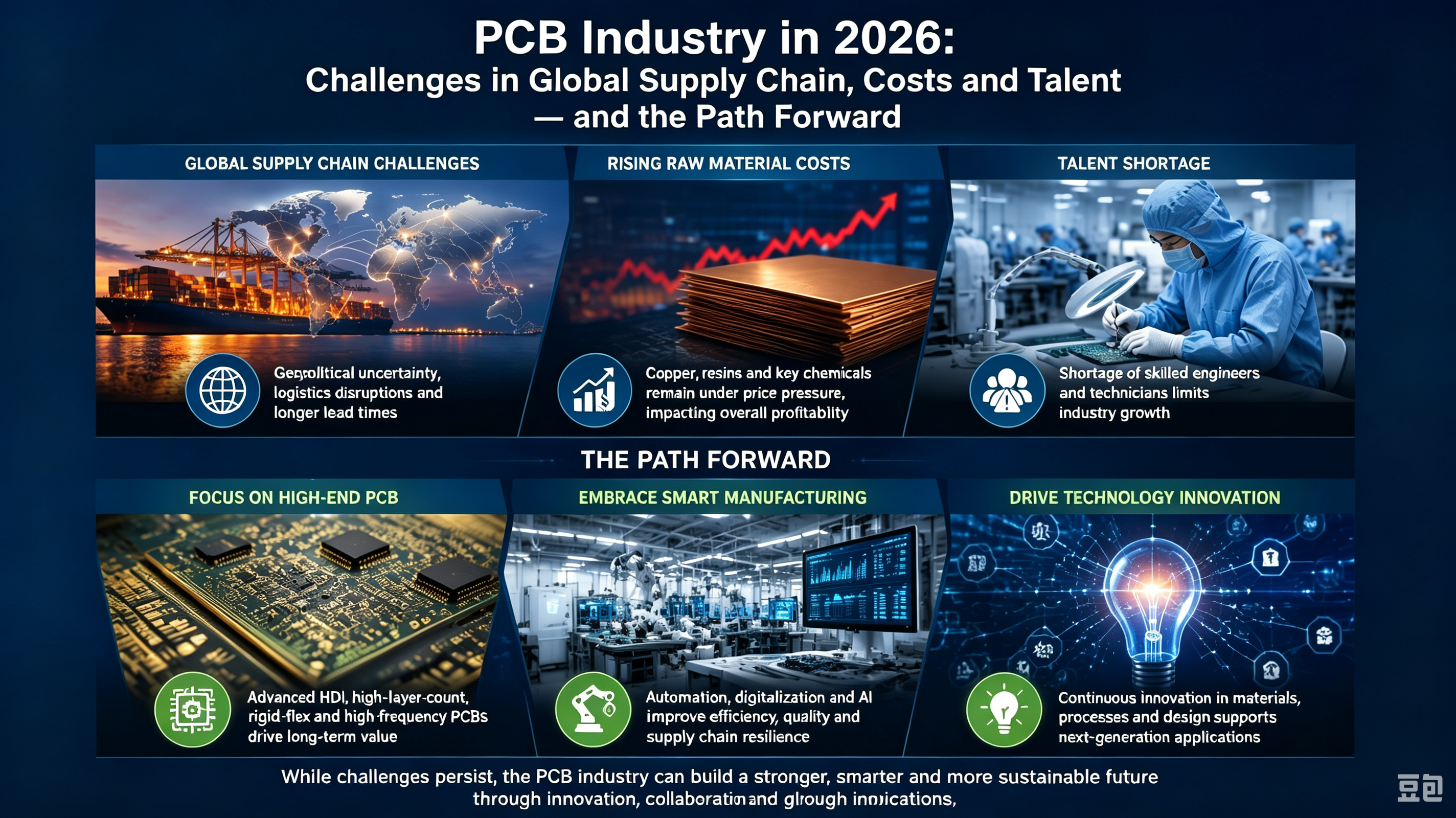
The printed circuit board (PCB) industry continues to play a critical role in the global electronics ecosystem.
As electronic products become more intelligent, compact, and interconnected, PCB manufacturers are facing both new opportunities and unprecedented challenges.
In 2026, the industry landscape is being reshaped by several key factors, including global supply chain uncertainty, rising raw material costs, increasing technical requirements, and a shortage of experienced manufacturing talent.
These challenges are not only affecting PCB manufacturers but also impacting EMS companies, OEMs, and electronics brands worldwide.
The future competition of the PCB industry will no longer depend only on production capacity or price advantages. Instead, success will increasingly rely on manufacturing resilience, technological innovation, and long-term cooperation.
Global Supply Chain Challenges Require Greater Resilience
Over the past several years, global electronics supply chains have experienced significant changes caused by geopolitical uncertainty, logistics disruptions, regional manufacturing adjustments, and changing market demands.
For PCB buyers, supply chain stability has become a critical factor when selecting suppliers.
A reliable PCB partner must have the ability to:
• Maintain stable production capability;
• Manage material supply risks;
• Respond quickly to market changes;
• Ensure consistent delivery performance.
Companies are gradually shifting from short-term cost-driven sourcing strategies toward long-term partnerships with suppliers that can provide reliability and continuous support.
Rising Raw Material Costs Continue to Pressure the Industry
Raw materials remain one of the most important factors influencing PCB manufacturing costs.
Copper, glass fiber cloth, resin systems, and other key materials have experienced increasing cost pressure in recent years.
These fluctuations directly impact:
• Copper clad laminate costs;
• PCB manufacturing expenses;
• Supplier profitability;
• Long-term pricing stability.
However, cost management is no longer simply about reducing prices.
Leading PCB manufacturers are focusing on improving production efficiency, optimizing processes, strengthening supply chain management, and creating more sustainable manufacturing systems.
Talent Shortage Is Becoming a Long-Term Industry Challenge
As PCB technology continues to advance, manufacturing processes are becoming increasingly complex.
High-layer-count boards, HDI technology, rigid-flex PCBs, high-frequency applications, and advanced electronic products require deeper engineering knowledge and manufacturing experience.
However, the shortage of skilled engineers and experienced technicians has become a challenge across the industry.
For PCB manufacturers, investing in talent development and maintaining experienced technical teams will become an important competitive advantage.
Manufacturing expertise accumulated over years cannot be easily replaced.
The Future Path: High-End Manufacturing, Smart Production, and Innovation
Although challenges remain, the PCB industry continues to create new opportunities through technological advancement.
The future development direction will focus on three key areas:
1. Focus on High-End PCB Manufacturing
Demand for advanced PCB solutions continues to grow in industries such as:
• Automotive electronics;
• Industrial automation;
• Medical equipment;
• Telecommunications;
• Artificial intelligence applications.
High-density interconnect (HDI), high-layer-count PCBs, rigid-flex boards, and high-frequency materials will continue to drive industry growth.
2. Embrace Smart Manufacturing
Digital transformation is becoming increasingly important in PCB production.
Automation, intelligent production management, real-time monitoring, and data-based quality control can help manufacturers:
• Improve production efficiency;
• Enhance process consistency;
• Reduce manufacturing risks;
• Strengthen supply chain resilience.
Smart manufacturing will become a key factor in maintaining competitiveness.
3. Drive Continuous Technology Innovation
The future PCB industry will depend on continuous innovation in:
• Materials;
• Manufacturing processes;
• Engineering solutions;
• Product design support.
Manufacturers that can combine technology, experience, and customer collaboration will be better positioned to support next-generation electronics.
Building a Stronger Future Through Partnership
The PCB industry will continue to experience changes and challenges, but these challenges also create opportunities for companies that are prepared.
For EMS manufacturers and electronics companies, selecting a PCB supplier is no longer only about price.
The ideal partner should provide:
• Stable supply capability;
• Strong manufacturing expertise;
• Reliable quality;
• Responsive engineering support;
• Long-term cooperation.
At Shenzhen Banchengpin Electronic Technology Co., Ltd., we believe the future of PCB manufacturing depends on experience, innovation, and collaboration.
With more than a decade of PCB manufacturing experience, we continue to improve our capabilities and support global customers with reliable PCB solutions.
The challenges of today are shaping the innovations of tomorrow.
Through technology, cooperation, and continuous improvement, the PCB industry can build a stronger, smarter, and more sustainable future.
Leave your message