Building a Resilient PCB Supply Chain: What EMS Manufacturers Should Look for in 2026
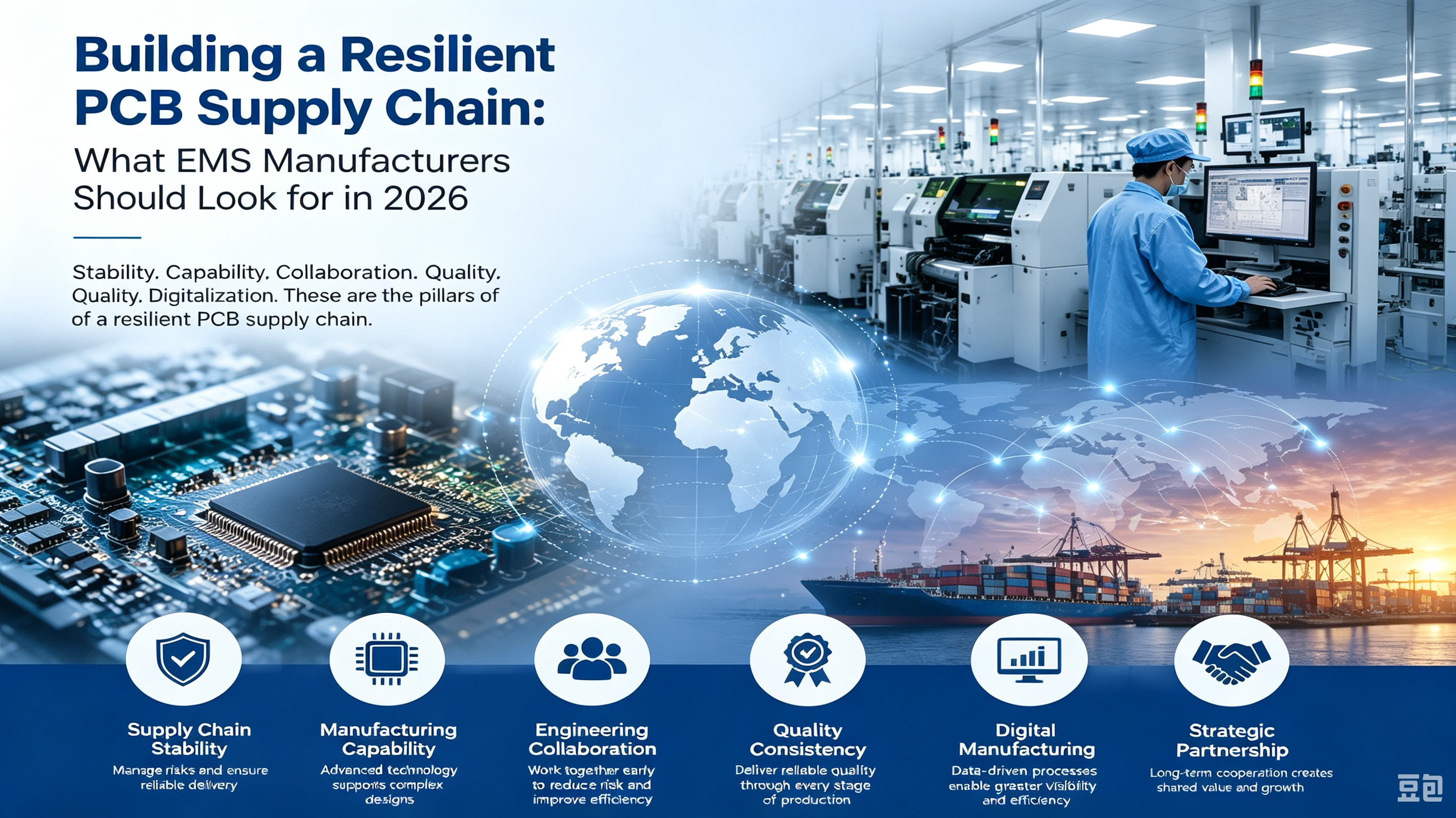
Building a More Resilient Electronics Supply Chain
The global electronics industry continues to evolve at an unprecedented pace. While technological innovation is creating exciting opportunities, it is also introducing new challenges across the supply chain.
From fluctuating raw material prices and geopolitical uncertainty to increasing product complexity and shorter product life cycles, EMS manufacturers are operating in an environment where supply chain resilience has become more critical than ever.
Today, selecting a PCB supplier is no longer simply a purchasing decision — it is a strategic decision that directly affects production continuity, product quality, delivery performance, and customer satisfaction.
As we move through 2026, successful EMS companies are placing greater emphasis on building long-term partnerships with suppliers that can provide stability, technical expertise, and consistent support.
Supply Chain Stability Is No Longer Optional
Over the past several years, the electronics industry has experienced repeated disruptions caused by material shortages, transportation delays, price volatility, and regional manufacturing challenges.
Although many markets have gradually recovered, uncertainty remains a constant factor.
For PCB procurement teams, supplier reliability has become just as important as price competitiveness.
A resilient PCB supply chain depends on suppliers that can maintain stable production, respond quickly to market changes, and minimize the impact of external disruptions.
Rather than reacting to unexpected events, leading EMS manufacturers are strengthening their supplier networks to improve long-term operational resilience.
Manufacturing Capability Supports Product Innovation
As electronic products continue to become smaller, faster, and more intelligent, PCB requirements are becoming increasingly demanding.
Applications such as industrial automation, automotive electronics, medical devices, telecommunications, and AI-enabled systems require higher manufacturing precision, tighter tolerances, and greater process consistency.
This means PCB suppliers must continuously invest in advanced manufacturing technologies, process optimization, quality management, and engineering capabilities to support evolving customer requirements.
Manufacturing excellence is no longer measured only by production capacity, but by the ability to consistently deliver reliable quality across increasingly complex designs.
Engineering Collaboration Reduces Risk
The relationship between an EMS manufacturer and its PCB supplier has evolved significantly.
Rather than acting solely as a production vendor, an experienced PCB supplier can contribute valuable engineering support throughout the product development cycle.
Early collaboration on manufacturability, material selection, process optimization, and risk assessment helps reduce production issues before they occur.
This collaborative approach shortens development cycles, improves yield, reduces total manufacturing costs, and ultimately supports faster time-to-market.
As product complexity increases, engineering communication is becoming an increasingly valuable part of successful supply chain management.
Quality Consistency Builds Long-Term Confidence
For EMS manufacturers, consistent PCB quality directly influences assembly efficiency, product reliability, and customer satisfaction.
Quality management should extend beyond final inspection to encompass every stage of the manufacturing process — from incoming material verification and process control to electrical testing and continuous improvement.
More importantly, quality should be viewed not simply as compliance with specifications, but as a commitment to delivering predictable and repeatable manufacturing performance over the long term.
Reliable quality creates confidence throughout the supply chain and strengthens partnerships between manufacturers and their customers.
Digital Manufacturing Is Shaping the Future
Digital transformation continues to reshape PCB manufacturing.
Automation, intelligent production management, real-time process monitoring, and data-driven quality analysis are enabling manufacturers to improve efficiency while maintaining greater process consistency.
For EMS companies, working with suppliers that embrace digital manufacturing practices can improve visibility, shorten response times, and support more reliable production planning.
As customer expectations continue to rise, digital capabilities will become an increasingly important differentiator across the PCB industry.
Choosing a Strategic PCB Partner
When evaluating PCB suppliers, procurement teams are increasingly looking beyond unit pricing.
Long-term value is created through consistent quality, responsive technical support, reliable delivery, transparent communication, and the ability to adapt to changing customer requirements.
The strongest supplier relationships are built on mutual trust, continuous improvement, and shared business objectives.
A dependable PCB supplier should become an extension of the customer's manufacturing team rather than simply another vendor.
Conclusion
The electronics industry will continue to face uncertainty, but it will also continue to create new opportunities for companies that are prepared.
Building a resilient supply chain requires more than diversified sourcing — it requires strong partnerships based on reliability, technical competence, and long-term collaboration.
At Shenzhen Banchengpin Electronic Technology Co., Ltd., we believe sustainable partnerships are built through consistent quality, responsive service, and continuous improvement.
We remain committed to supporting global EMS manufacturers with dependable PCB manufacturing and a collaborative approach that helps customers navigate an increasingly dynamic industry.
A resilient supply chain begins with trusted partnerships — and together, we can build a stronger future for global electronics manufacturing.
Leave your message